West Virginia’s New Office of Entrepreneurship Begins Work Helping Small Businesses Navigate State Government
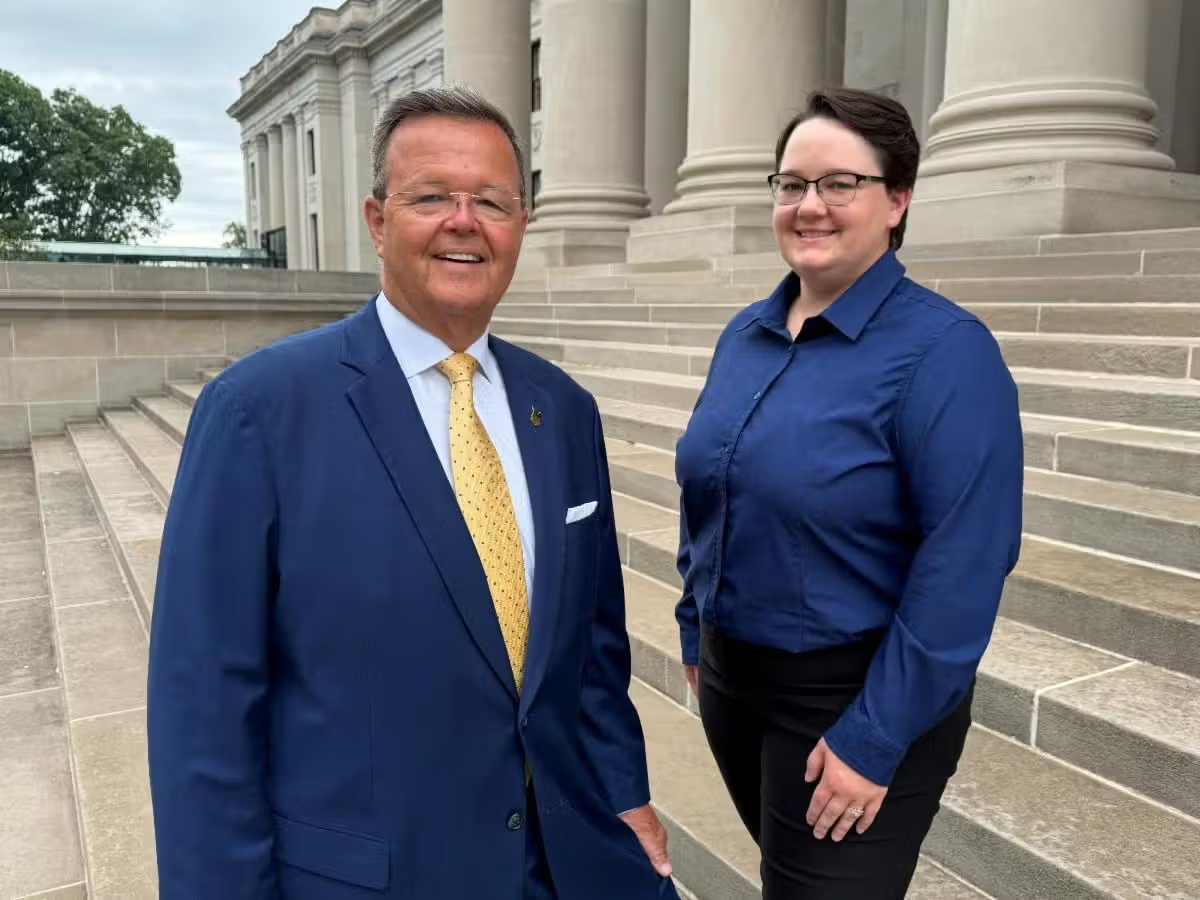
FAIRMONT, W.Va. West Virginia’s new Office of Entrepreneurship is officially open, giving small business owners and entrepreneurs a new point of contact inside state government when they are trying to start, operate or grow a business.
Secretary of State Kris Warner discussed the new office during a regional luncheon in Fairmont this week, saying the goal is to help entrepreneurs navigate state government, connect them with the right agencies and identify problems that repeatedly make it harder to do business in West Virginia.
The Office of Entrepreneurship began operations July 1 within the Secretary of State’s Office. State officials have described it as the first state level entrepreneurship office in the nation operating under the direct oversight of a statewide elected official.
“This office will empower entrepreneurs and bolster entrepreneurship across West Virginia,” Warner said when the launch was announced. “The mission of the WVOE is to connect entrepreneurs with the right resources, help them navigate red tape, and foster a stronger, more vibrant ecosystem for startups and small businesses throughout our state.”
Speaking in Fairmont, Warner said the need for the office became clear through the Secretary of State’s regular contact with new and existing businesses.
“You don’t know how many times we have people that registered their business with the Secretary of State’s Office and then say, ‘I just gave up because I couldn’t get ahold of this office, or this office, in state government,’” Warner told the audience.

The new office is intended to help close that gap.
Rather than replacing existing agencies or business support organizations, the Office of Entrepreneurship is designed to serve as a guide. Its core responsibilities include helping entrepreneurs navigate the early stages of business formation, making referrals to state agencies and partner organizations, identifying barriers in business formation and regulatory processes and coordinating with other groups already working with entrepreneurs.
That approach was part of the original proposal. When Warner’s office encouraged lawmakers to create the office earlier this year, it described the new effort as a central coordinating hub that could reduce regulatory confusion, improve referrals, expand access to resources and provide useful information to entrepreneurs without duplicating the work of existing agencies.
For Warner, the office should not only answer individual questions. It should also listen for repeated problems and report those barriers back to state leaders.
“When we figure out what the barriers to entry are for entrepreneurs, we’re going to carry that back and report it to the state Legislature,” Warner said in Fairmont.
That listening role is one of the most important parts of the new office.
Under the law, the Office of Entrepreneurship is expected to help identify systemic barriers facing entrepreneurs and provide information to state leaders about the condition of entrepreneurship in West Virginia. The office is also expected to develop a first year implementation plan for receiving requests, making referrals and tracking assistance.
The office is required to respond to entrepreneurs, startups and growing businesses within 48 hours or by the close of the next business day. More complicated questions may take longer, but the office must provide an initial response and an estimated timeline. Government liaison services are required to remain available at no cost.
Warner told the Fairmont audience that Lesli Taylor, the office’s new coordinator, is already answering calls and helping point people in the right direction.
Taylor was selected to lead the new office after working as assistant director of research and evaluation for West Virginia GEAR UP at the West Virginia Higher Education Policy Commission. The Secretary of State’s Office said Taylor brings nearly a decade of experience in research, economic and community development, program evaluation and organizational strategy. She will work from the State Capitol office and the West Virginia One Stop Business Center in Charleston.
The new office is expected to work alongside organizations already serving West Virginia businesses, including the West Virginia Small Business Development Center, the Department of Economic Development, colleges and universities and other members of the state’s entrepreneurship network.
State officials have emphasized that the office is not intended to duplicate those organizations.
Instead, the goal is to make it easier for entrepreneurs to find them.
“Many entrepreneurs want to start a business but don’t know where to turn,” Warner said earlier this year. “We regularly connect entrepreneurs and small businesses with people and resources from the Small Business Development Center, WV Grant Resource Centers, and a number of other agencies. The Office of Entrepreneurship will expand those liaison services and guidance we can offer while ensuring we do not duplicate the work of other agencies.”
The Office of Entrepreneurship was created through Senate Bill 878 during the 2026 regular session and became effective July 1.
For entrepreneurs, the practical promise of the new office is straightforward.
If someone starts a business and does not know which agency to contact next, the state now has an office whose job is to help them find the answer. If the same obstacle keeps showing up for business after business, that information is supposed to make its way back to state leaders.
Warner said that is the point.
The office is not only meant to help entrepreneurs move through government. It is also meant to help government better understand where entrepreneurs are getting stuck.