West Virginia Governor Unveils 20-Year Plan for Data Center Development
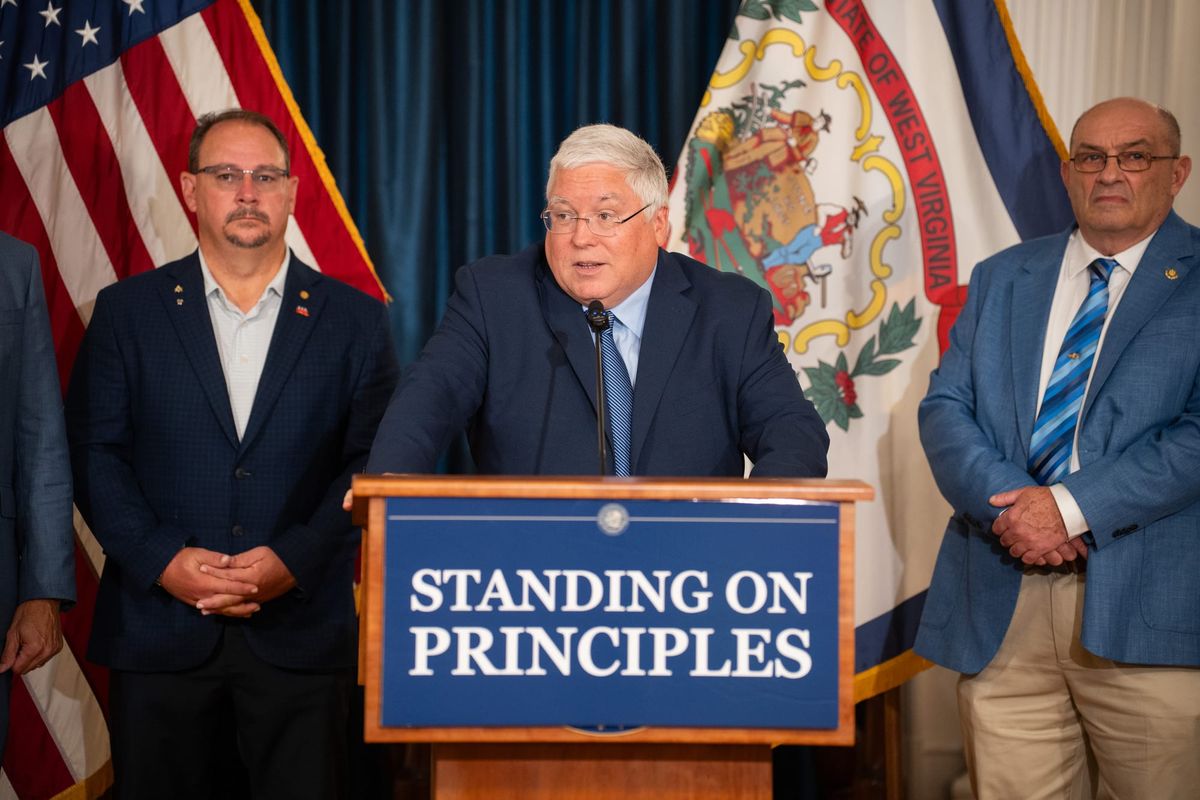
CHARLESTON, W.Va. — Gov. Patrick Morrisey and West Virginia legislative leaders unveiled a new 20-year framework Tuesday aimed at making the state a major destination for data centers while establishing protections for electric ratepayers, water resources and communities where projects could be built.
Morrisey was joined by Senate President Randy Smith, House Speaker Roger Hanshaw and state economic development officials to announce the West Virginia Responsible Data Center Development Plan.
The framework is the latest step in West Virginia’s effort to compete for major investment tied to artificial intelligence, cloud computing and other technologies that require significant computing power and electricity.
“Today, as the world stands on the cusp of a new digital and economic frontier, West Virginia is stepping forward once again to lead, not by repeating the mistakes of other states, but by implementing a proactive, 20-year development strategy on our terms,” Morrisey said.
The plan builds on House Bill 2014, the Power Generation and Consumption Act passed in 2025, which created a state certification process for high-impact data centers and allowed certified microgrid districts to generate power for those facilities.
Tuesday’s announcement focused heavily on concerns that have emerged as West Virginia has moved to recruit the industry.
Among the biggest questions is who will pay for the large amount of electricity and infrastructure required by major data centers.
Under what state officials are calling a Ratepayer Protection Pledge, developers would be required to build, bring or procure the energy resources needed for their projects and pay for their own infrastructure and microgrid costs.
State leaders say regulated utility customers would not be responsible for those expenses.
The framework also outlines how revenue generated by qualifying high-impact data center projects would be distributed.
According to the administration, 50 percent of project revenue would be dedicated to reducing the state’s personal income tax. Host counties would receive 30 percent for schools and government operations, 10 percent would be distributed among the state’s other counties and another 10 percent would go toward local water, wastewater and electrical infrastructure improvements.
Water use is also addressed in the plan.
Large data centers can require substantial cooling infrastructure. The administration said existing environmental oversight would remain in place while the state encourages technologies such as closed-loop cooling, liquid immersion cooling and reclaimed water.
The framework also calls for a Data Center Advisory Council made up of representatives from local government, academia, conservation organizations, utilities and industry.
The group would make recommendations on issues including setbacks, noise, security and the location of facilities near homes, schools, churches and other sensitive areas.
Community involvement has been one of the more closely watched issues surrounding West Virginia’s data center push.
HB 2014 shifted significant authority over high-impact data centers and microgrid developments to the state. The administration said the new framework is intended to provide additional safeguards as projects are reviewed and give officials the ability to reject developments that do not meet state standards.
West Virginia currently has no operating hyperscale data center, giving state leaders an opportunity to establish rules before the industry develops more extensively in the state.
Companies seeking certification must provide information including their proposed location, estimated capital investment, power strategy, electrical demand and projected water consumption.
To qualify as a high-impact data center, a project must have an estimated critical information technology load of at least 90 megawatts.
Grid reliability is another central part of the framework. Developers would be required to coordinate their electricity needs with utilities and comply with regional and federal reliability requirements.
State leaders are also framing data center development as an economic development and national competitiveness issue as demand for artificial intelligence and advanced computing continues to grow.
“This shared framework gives us the exact blueprint we need to attract billions in private investment, create thousands of high-paying construction and technology jobs, lower taxes for our citizens, and revitalize economically distressed regions, all while preserving the wild and wonderful state we call home,” Morrisey said.
The announcement represents an effort by Morrisey and legislative leaders to establish a common approach before large-scale data center development takes hold in West Virginia.