Ike Morris Remembered for His Contributions to Glenville State and West Virginia
GLENVILLE, W.Va. — To understand the legacy of I.L. “Ike” Morris in West Virginia, one only has to look around Glenville.
A university stadium bears the Morris family name. A major campus center was built with help from a record-setting family gift. A new health and fitness complex is taking shape. Young athletes play at the Sue Morris Sports Complex. Students receive scholarships backed by the family foundation. Local families still have grocery stores that Morris helped keep from closing.
His influence reaches beyond those visible projects. Land he provided helped make possible two Gilmer County elementary schools and the federal correctional institution in Gilmer County. A former industrial building he donated became a training center for Glenville State University. And for more than six decades, the businesses he built created jobs throughout central West Virginia.
Morris died Monday, Oct. 19, at the age of 88, leaving behind a legacy that stretches well beyond the oil and natural gas business that made his success possible.
He was not born in West Virginia.
Born in Henryetta, Oklahoma, in 1937 and raised in Illinois, Morris arrived in Glenville in 1962 during an oil and gas boom. He came with experience learned from his father, an old truck and a willingness to work. Local banks and residents were willing to take a chance on him when he had little financial margin for error.
That chance became one of West Virginia's notable business success stories.
Morris built a well-service operation and began purchasing wells and property. As others left the industry after the boom, Morris continued buying, eventually accumulating more than 1,500 producing wells. He incorporated Waco Oil & Gas Co. in 1975, and the company grew into one of West Virginia's leading independently owned oil and gas operations.
His interests eventually extended far beyond energy. Morris was involved in land and mineral holdings, timber, coal mining, stone quarries, commercial and residential real estate and other ventures. Through Waco Foods, the family operated Foodland stores in Glenville, Grantsville and Craigsville. His business partnerships also included ventures with longtime West Virginia businessman Mike Ross.
At the time of Morris' death, businesses associated with the family employed more than 160 people in central West Virginia.
But much of the physical footprint Morris left across the region came from what he and his wife of 62 years, Sue, chose to do with that business success.
Nowhere is that more apparent than at Glenville State University.
In 2008, Ike and Sue Morris announced a $5 million gift to Glenville State, at the time the largest private gift in the institution's history. The contribution helped launch the university's Transforming Lives Now campaign, which supported academic, athletic and physical improvements and helped lead to development of what became the Waco Center.
At the time, Morris explained his attachment to the community simply.
“Gilmer County has always been very good to me,” Morris said. “There is absolutely nothing anyone could do to make me leave. I want to help make it better, especially for the young people.”
That investment continued for nearly two more decades.
The Morris family paid for artificial turf and other improvements at the university's football facility, supported the Waco Center and helped establish an accounting textbook scholarship. Morris donated the former Kinney Shoe building to Glenville State in 2009 for use as a Criminal Justice Training Center and made Waco-owned buildings available for athletic practices.
Through the Morris Family Foundation, the family also established an annual $500,000 matching challenge for Glenville State's Founders Day of Giving. In 2024, the match helped the university's fundraising campaign surpass $1 million, with money supporting scholarships and other university needs.
One of Morris' final major projects at Glenville State may also become one of his most consequential.
The Morris family helped lead development of the Morris Family Health and Fitness Complex, designed to combine athletics, public fitness and Glenville State's expanding health sciences programs. The project is intended to provide new academic and training opportunities as the university works to prepare students for health care careers in rural West Virginia.
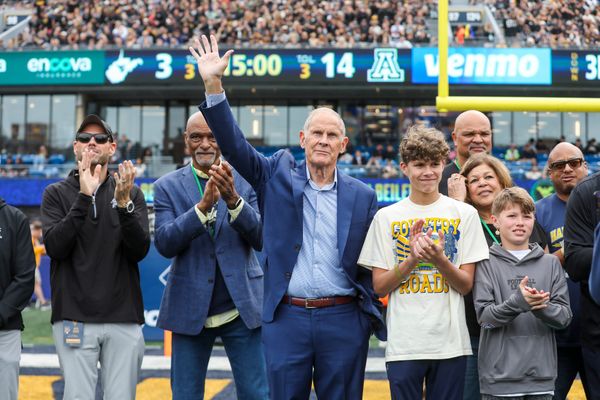
On Sept. 3, just weeks before his death, Morris and members of his family were on campus for the dedication of the new Ike and Sue Morris Stadium. The stadium is part of the larger health and fitness complex and opened with a Glenville State football victory that evening.
His support of athletics extended beyond the university.
The Morris Foundation operates the Sue Morris Sports Complex, providing baseball and softball facilities for young athletes in the region. Morris was inducted into Glenville State's Athletic Hall of Fame in 2016.
Some of his largest contributions to Gilmer County had little to do with having his name attached to a building.
The Morris family provided land for two county elementary schools. Morris also worked with longtime U.S. Sen. Robert C. Byrd in efforts to bring the Federal Correctional Institution at Gilmer to the county, donating family land for the federal facility. The Duck Run Bridge was later named for Morris in recognition of his service to the area.
When three area grocery stores faced an uncertain future, the Morris family took them over rather than allow communities to lose nearby access to groceries. Those stores in Glenville, Grantsville and Craigsville became part of Waco Foods.
There was also a side of Morris' giving that rarely appeared on buildings or plaques.
Morris was also known for helping Glenville State students who could not return home during breaks, providing food and other necessities. University officials have described many of his acts of generosity as quiet contributions that often went unrecognized.
Morris created the Morris Foundation in part to ensure that work could continue beyond his lifetime.
His service extended into West Virginia's business and civic communities as well. Morris served on the boards of United Bank, Alliance Petroleum and the West Virginia Oil and Gas Commission and was active with state and national petroleum organizations.
He was named West Virginia Oil & Gas Man of the Year in 1994, received Glenville State's honorary Doctor of Public Service degree in 2007, earned The State Journal's Lifetime Achievement Award in 2018 and received the Gas and Oil Association of West Virginia's Rusty Hutson Sr. Heritage Award in 2023.
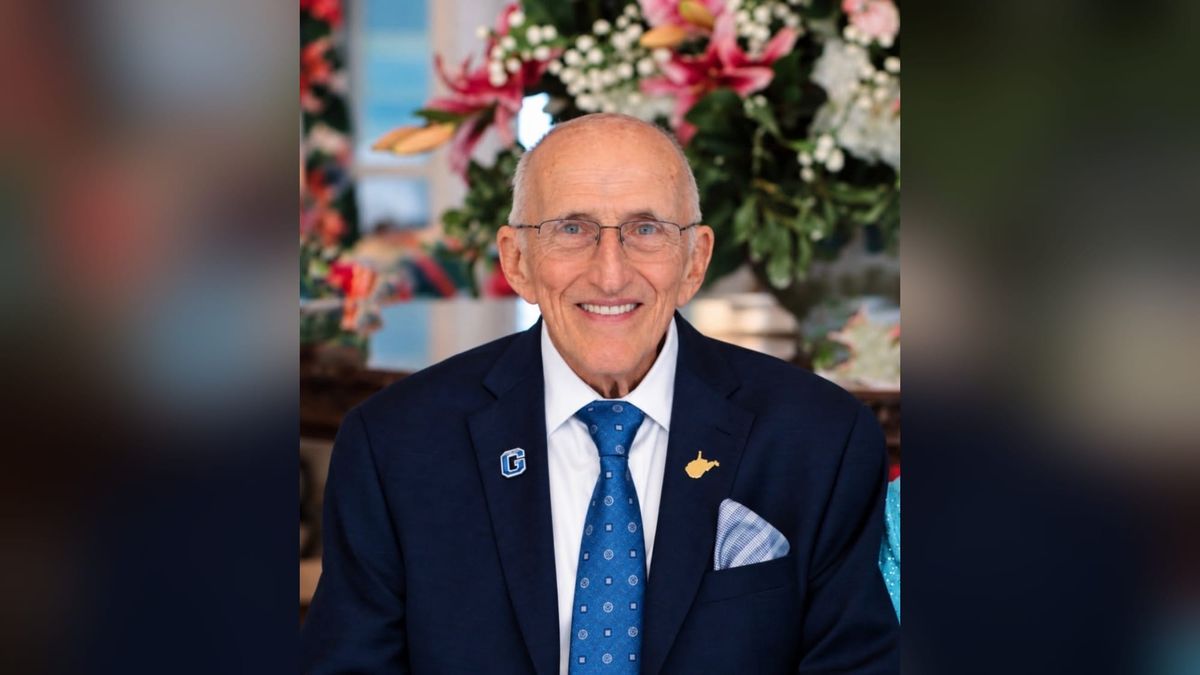
Just last month, Morris was inducted into the West Virginia Business Hall of Fame at The Greenbrier, joining the 2026 class recognized by West Virginia University's John Chambers College of Business and Economics.
For all the recognition, Morris repeatedly returned to the same explanation for why he invested so heavily in the state.
West Virginia had given him an opportunity.
He chose to return it.
In a 2023 interview with WV News, Morris spoke about his belief that life is filled with givers and takers.
“And I want to be, and my family to be, givers,” Morris said.
He established the Morris Foundation to ensure that his family's commitment to creating opportunities and supporting West Virginia communities would continue for generations.
Morris is survived by his wife, Sue; children Douglas Morris and Shelly Smith; grandchildren and great-grandchildren.
Visitation will be held from noon to 8 p.m. Thursday, Oct. 22, at the Waco Center at Glenville State University. A private burial will be held at a later date.
It is difficult to separate Morris' story from the story of modern Glenville. He built businesses there, employed people there, helped preserve essential businesses there and spent decades investing in the university and community around him.
He could have taken the success he found in West Virginia almost anywhere.
He stayed.
And for 64 years, he continued building in the place that had first given him a chance.
Perhaps no words better capture his relationship with the Mountain State than a phrase he was known to repeat throughout his life.
“I might not have been born in West Virginia, but I got here as fast as I could.”