Remembering the Silver Fox: Longtime Mountaineer Broadcaster Jay Jacobs Dies at 88
MORGANTOWN, W.Va. – From growing up watching basketball at the old WVU Field House to playing alongside Jerry West and spending nearly five decades behind a microphone, Jay Jacobs witnessed some of the most significant chapters in West Virginia University basketball history.
Jacobs, affectionately known as the “Silver Fox,” died Wednesday at the age of 88. His passing was announced by West Virginia University’s men's basketball program.
A Morgantown native, former Mountaineer basketball player, educator, coach and member of the WVU Sports Hall of Fame, Jacobs developed a connection with generations of West Virginians through his knowledge of the game, distinctive personality and passion for Mountaineer basketball.
His association with the university stretched across much of his life, beginning long before his broadcasting career.
From Morgantown High to Mountaineer Basketball
Jacobs grew up in Morgantown, where his father operated a clothing store on High Street. He began attending WVU basketball games with his father at the age of six.
He developed into one of the state's top high school basketball players, earning all-state honors at Morgantown High School and finishing his career with 1,268 points. His school scoring record stood for more than half a century before being surpassed by future Mountaineer Nathan Adrian in 2013.
In 1956, Jacobs helped lead Morgantown to the state championship game against East Bank, which featured future basketball legend Jerry West. East Bank defeated Morgantown 71-56, but the two high school standouts would soon become teammates at West Virginia University.
Jacobs played during what became known as the Golden Era of Mountaineer basketball, including as a member of the 1959 team that advanced to the NCAA national championship game before falling to California by one point.
He earned his bachelor’s degree in physical education from WVU in 1961, followed by a master’s degree in education in 1962.
A Career in Education and Coaching
Before becoming a household name through Mountaineer basketball broadcasts, Jacobs built a career in public education.
He coached basketball for four years at Union High School in Benwood, West Virginia, leading two of his teams to sectional championships. He was the school's final basketball coach before it became part of John Marshall High School through consolidation.
Jacobs later moved to Maryland, where he coached at Thomas Johnson High School in Frederick before transitioning into school administration.
While working in Maryland, Jacobs began providing commentary for local high school basketball television broadcasts, an opportunity that would eventually lead him back to his alma mater.
He retired from education in 1996 as an assistant principal at Ballenger Middle School, allowing him to devote more of his time to Mountaineer basketball.
Nearly Five Decades Behind the Microphone
In 1977, Jacobs joined the Mountaineer Sports Network as a television basketball analyst, working alongside Jack Fleming and Woody O’Hara.
His broadcasting career also included television assignments for ESPN, Home Team Sports and other regional sports productions.
Jacobs eventually shifted his focus to radio, beginning his partnership with Tony Caridi during the 1996-97 basketball season. Together, the two became familiar voices in homes, businesses and vehicles throughout West Virginia.
His time behind the microphone spanned multiple generations of Mountaineer basketball, including the coaching tenures of Gale Catlett, John Beilein and Bob Huggins.
Jacobs provided commentary during West Virginia’s memorable NCAA Tournament run to the Elite Eight in 2005 and its return to the Final Four in 2010, more than 50 years after he had been part of the Mountaineers’ national runner-up team as a player.
His broadcasting career included eight trips to the Sweet 16. In addition to covering men’s basketball, Jacobs contributed to women’s basketball broadcasts and weekly coaches’ radio programs.
His commitment to WVU was evident even away from the microphone. For years, Jacobs regularly traveled more than two hours from his home in Walkersville, Maryland, across the mountains to Morgantown to cover games and participate in radio shows.
His humor, storytelling and ability to connect with listeners became trademarks of his broadcasts. Having experienced Mountaineer basketball as a young fan, a player and eventually a broadcaster, Jacobs brought a perspective to the game that few others could offer.
A Hall of Fame Career and One Final Broadcast
In September 2023, Jacobs was inducted into the WVU Sports Hall of Fame in recognition of his decades of contributions to Mountaineer athletics.
The following month, he announced his retirement from the Mountaineer Sports Network.
Reflecting on his career at the time, Jacobs offered a simple description of the role he had cherished for decades.
“I was a fan just like you, but I had a microphone in my hand,” Jacobs said in a statement released by WVU Athletics.
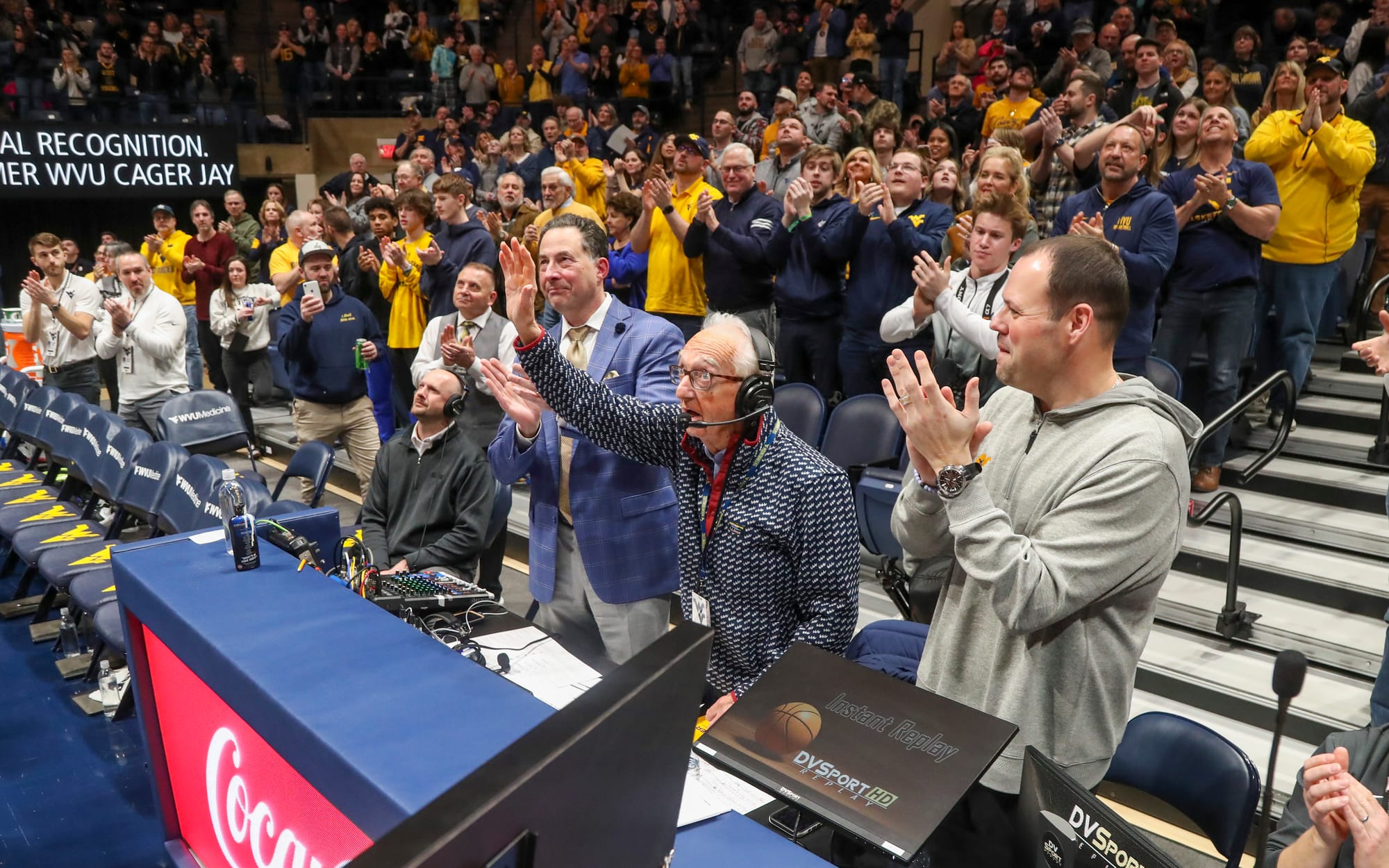
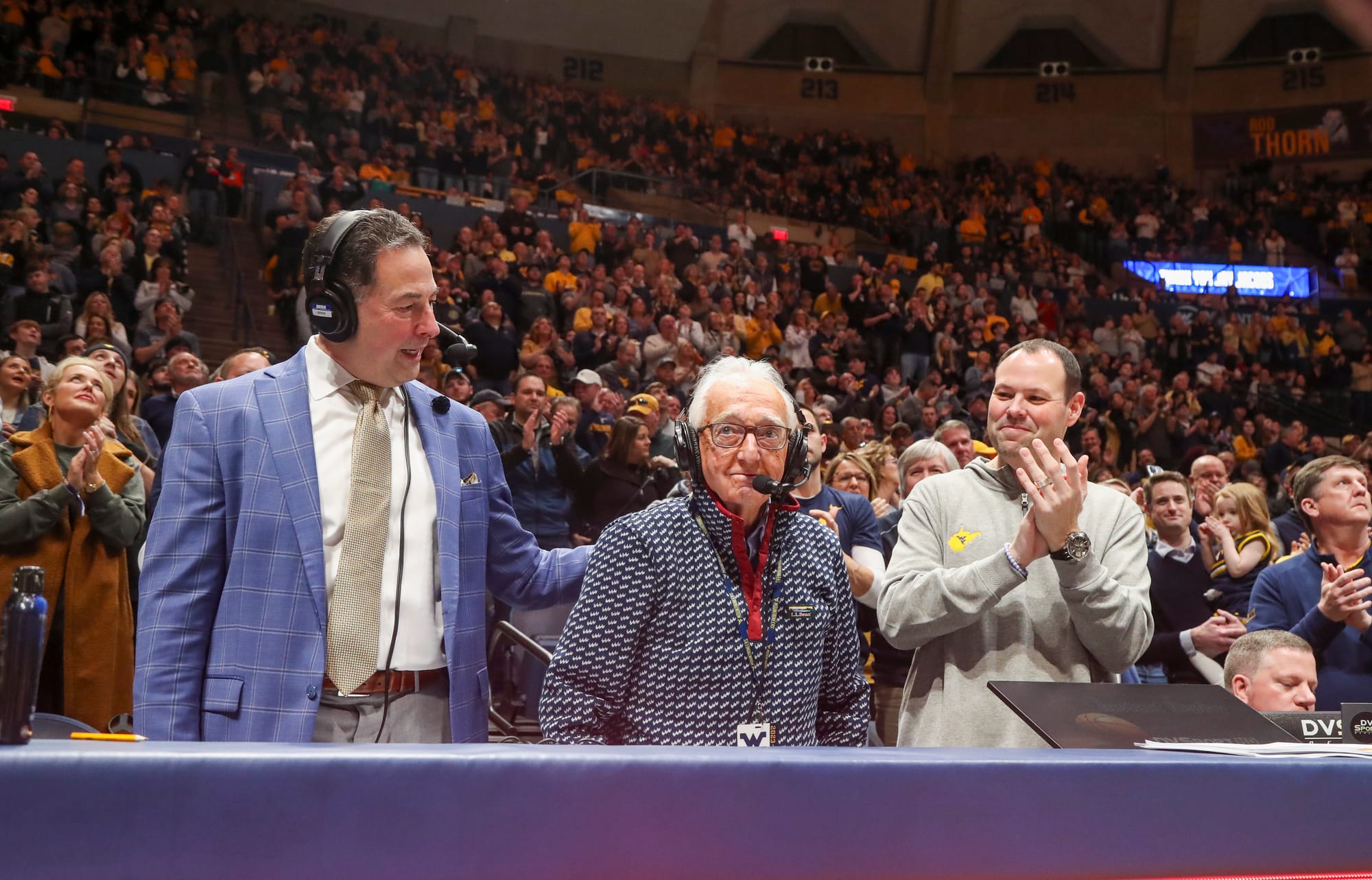
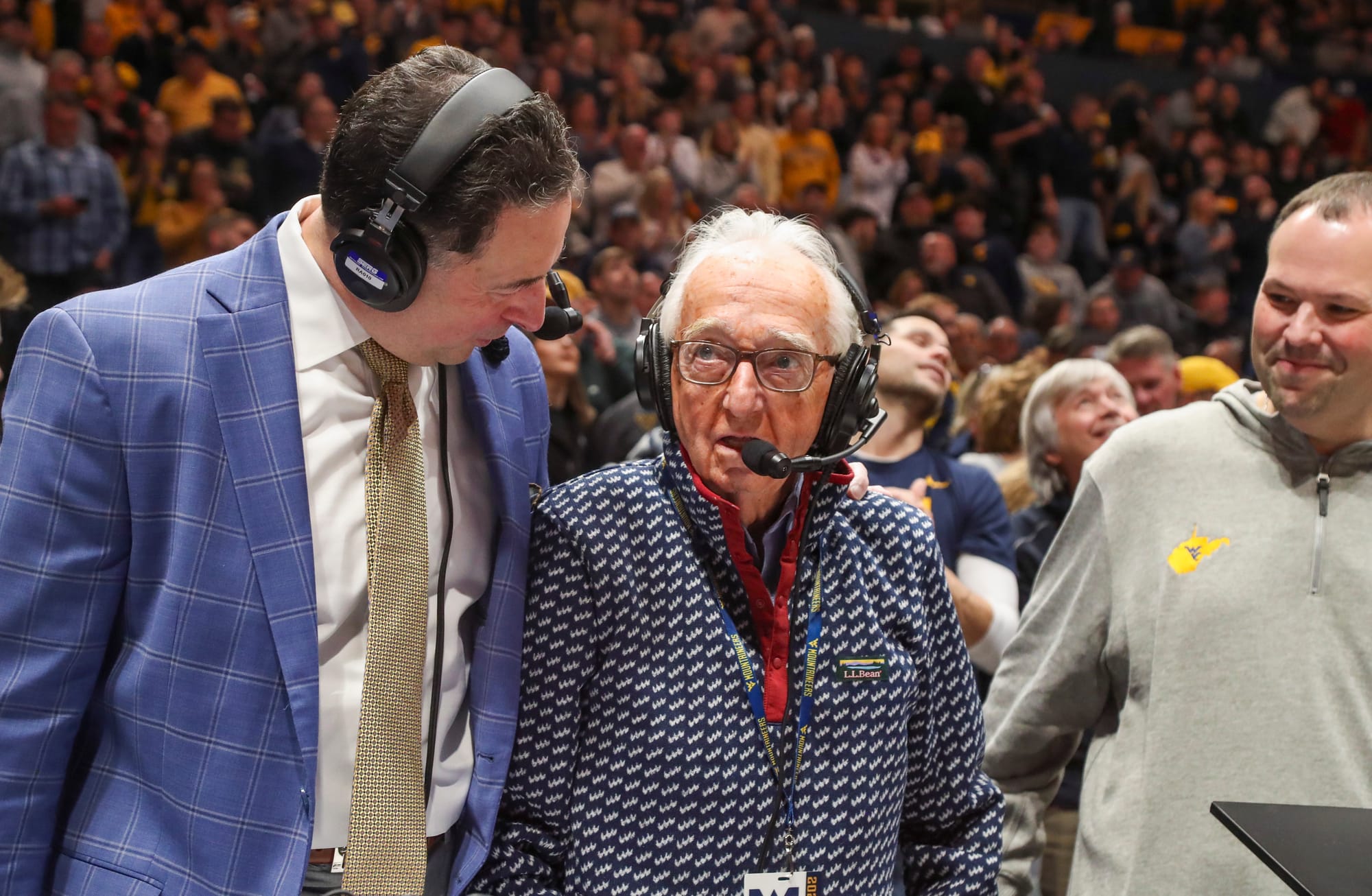
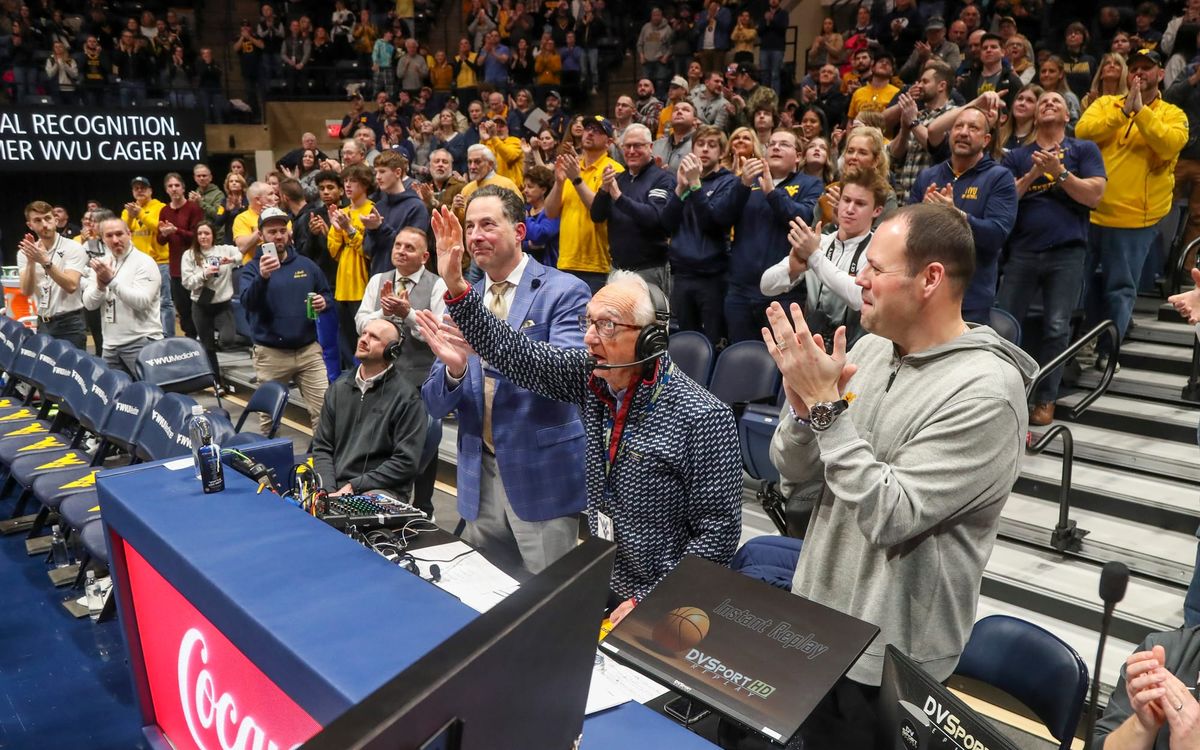
On February 3, 2024, Jacobs returned to the WVU Coliseum for one final broadcast alongside longtime radio partner Tony Caridi as the Mountaineers hosted BYU.
During a break in the first half, Jacobs was recognized on the Coliseum floor, giving Mountaineer fans an opportunity to celebrate a man who had spent much of his life sharing the story of West Virginia basketball.
The photographs accompanying this article capture that evening and the closing chapter of a remarkable broadcasting career.
A Lasting Mountaineer Legacy
In announcing his passing Wednesday, WVU Basketball recognized Jacobs for his lasting impact on the program and the generations of fans who came to know him through his broadcasts.
From the days of Jerry West at the old WVU Field House to the modern era of college basketball, Jacobs occupied a unique place in the history of West Virginia University athletics.
He experienced the program’s greatest moments both on the court and behind the microphone, connecting an extraordinary era of Mountaineer basketball with generations of fans who would come after him.
For many West Virginians, his voice was as much a part of basketball season as the games themselves.
With his passing, West Virginia loses not only one of its most familiar voices, but a living connection to some of the most storied years in Mountaineer basketball history.