From Pearl Harbor to Tokyo Bay: The Remarkable Story of the USS West Virginia
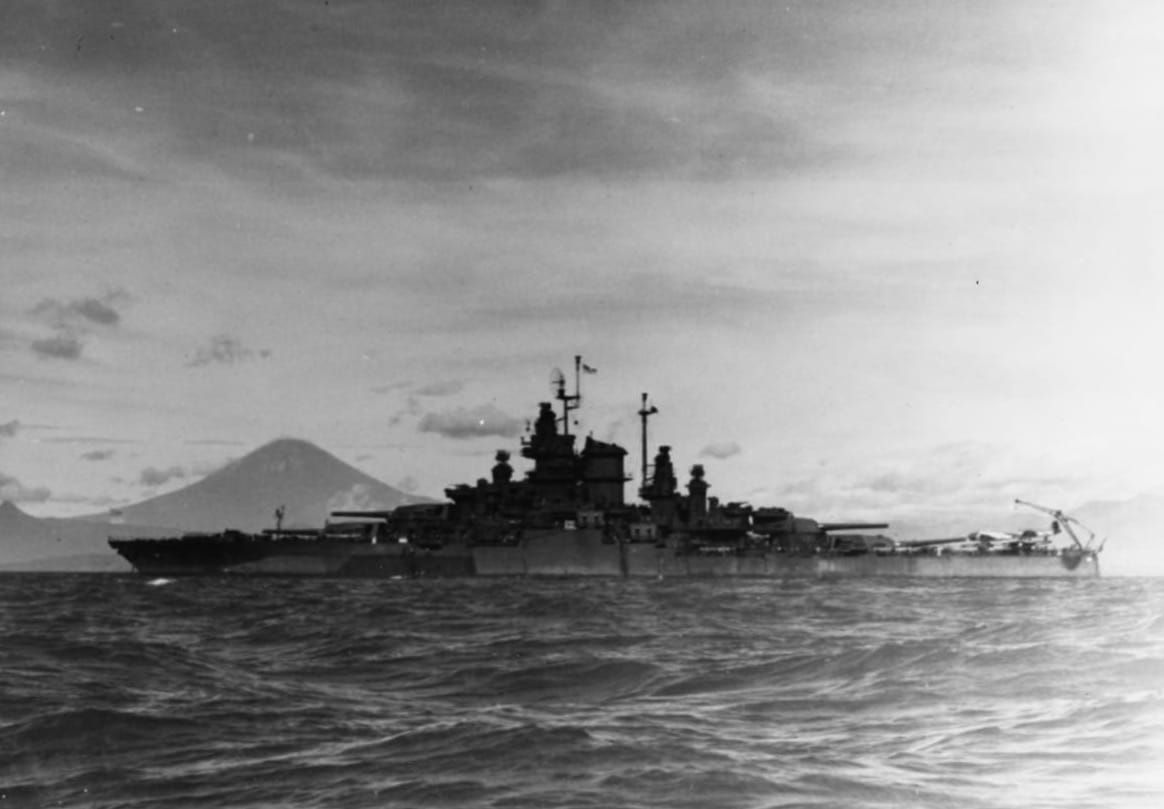
Eighty-one years ago, as World War II came to an end in the Pacific, an American battleship bearing the name of the Mountain State was there to see the war through.
The USS West Virginia had traveled an extraordinary road to get there.
Less than four years earlier, the battleship had been sunk at Pearl Harbor during the attack that brought the United States into World War II. It would eventually be raised, repaired, extensively rebuilt and returned to combat before arriving off the coast of Japan in the final days of the war.
By late August 1945, the USS West Virginia was anchored near Tokyo Bay with Mount Fuji visible behind it, creating one of the most striking photographs associated with the ship’s history.
The story began long before the war.
Commissioned in 1923, the USS West Virginia was designated BB-48 and became one of the major battleships of the United States Navy. By 1940, the ship had moved with the Pacific Fleet to Pearl Harbor.
Then came December 7, 1941.
The West Virginia was moored along Battleship Row when Japanese forces attacked Pearl Harbor. The battleship was struck repeatedly by torpedoes and bombs before sinking at its berth. More than 100 members of its crew were killed.
For some ships, that would have been the end.
For the West Virginia, it became the beginning of a remarkable comeback.
The ship was salvaged in 1942, temporarily repaired at Pearl Harbor and eventually sent to the Puget Sound Navy Yard in Washington for a major reconstruction.
The rebuilt battleship looked substantially different from the vessel that had been attacked in 1941. It received significant improvements to its armor, weapons and overall design before returning to the Pacific.
By 1944, the USS West Virginia was back in combat.
One of its most notable moments came during the Battle of Leyte Gulf in the Philippines.
During the Battle of Surigao Strait in October 1944, the West Virginia joined other American battleships in confronting a Japanese force in what became the last battleship-versus-battleship engagement in naval history.
Several of the American battleships participating in the battle had themselves survived the attack on Pearl Harbor.
The USS West Virginia continued fighting across the Pacific.
Its massive 16-inch guns supported American operations at Mindoro, Lingayen Gulf, Iwo Jima and Okinawa as U.S. forces moved closer to the Japanese home islands.
Then, in August 1945, the war reached its conclusion.
Japan announced its acceptance of Allied surrender terms in August, ending the fighting of World War II. The formal surrender documents would later be signed aboard the USS Missouri in Tokyo Bay on September 2, 1945.
The USS West Virginia was there.
The battleship was among the Allied ships present in Tokyo Bay for the formal surrender.
It was a fitting final chapter to the ship’s wartime story.
A battleship named for West Virginia had been sitting on the bottom at Pearl Harbor on the day America entered the war. Less than four years later, after being raised, rebuilt and sent back into battle, it was off the coast of Japan as that war ended.
From Pearl Harbor to Tokyo Bay, the USS West Virginia carried the name of the Mountain State through one of the defining chapters of American history.