Flock Safety Debate Moves to State Capitol as West Virginia Lawmakers Weigh Privacy Concerns
CHARLESTON, W.Va. — The growing debate over Flock Safety cameras has reached the West Virginia State Capitol, where lawmakers are beginning to consider how the increasingly popular law enforcement technology should be used and what protections may be needed for the public.
The Joint Standing Committee on Government Organization spent roughly two hours Sunday examining Flock Safety and its automated license plate reader technology, bringing representatives before lawmakers to answer questions about public safety, privacy, data collection and how information gathered by the cameras can be accessed and shared.
Kevin Kane, director of government affairs for Flock Safety, appeared before the committee to explain the company’s technology and its use by law enforcement agencies.
Lawmakers also heard from Alasdair Whitney, legislative counsel for the Institute for Justice, who raised concerns about government access to historical location information and the potential for widespread surveillance as networks of cameras continue to grow.
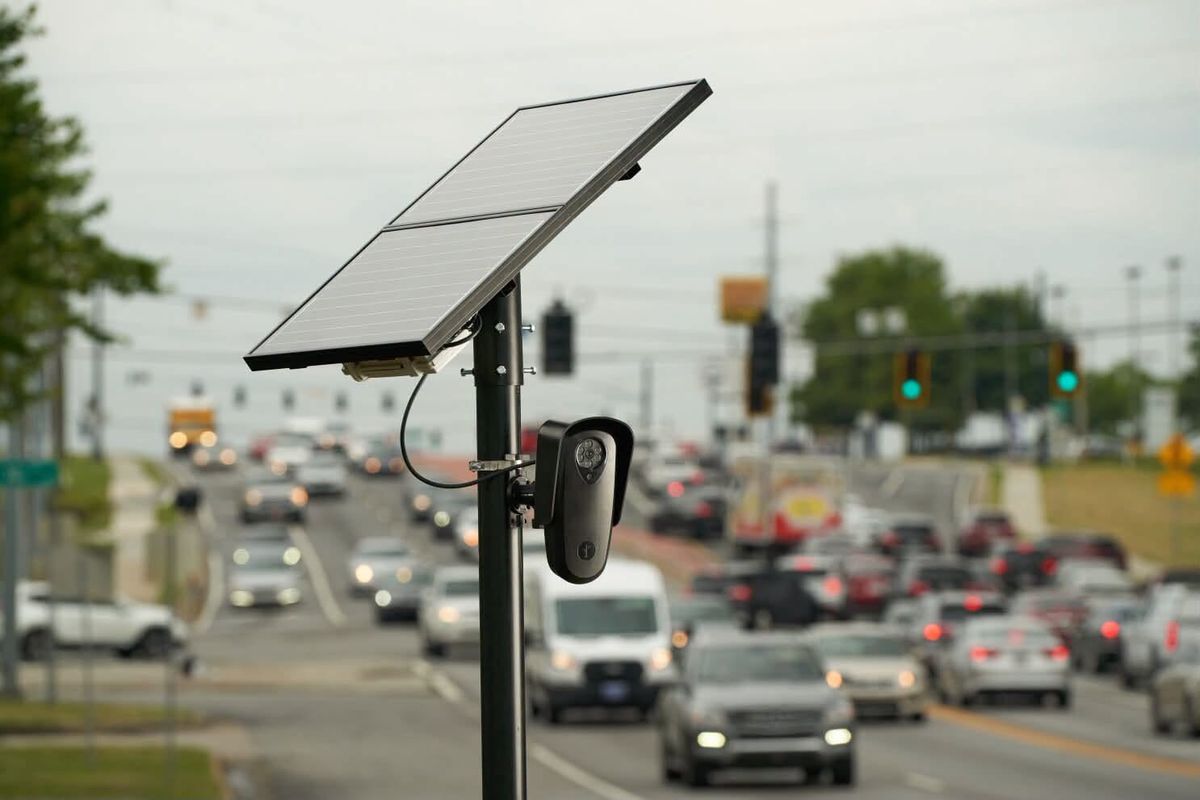
Flock’s automated license plate readers capture images of vehicles as they pass a camera and can collect information including a license plate number, vehicle make and model, color, time and location and other visible characteristics.
Law enforcement agencies can then search that information as part of criminal investigations, including efforts to locate stolen vehicles, identify vehicles connected to crimes or assist in cases involving missing or endangered people.
Flock has maintained that its license plate reader technology does not use facial recognition and does not identify the registered owner or driver of a vehicle simply by capturing an image.
But much of Sunday’s discussion focused less on what an individual camera can see and more on what can happen when information collected by many cameras is combined and searched over time.
Lawmakers questioned who can access the information, how agencies share data with one another, how searches across Flock’s broader network work and whether information collected by local law enforcement could ultimately become available to outside agencies.
Members also raised questions about how long information should be stored and whether there should be limits on searches that could potentially reconstruct where a vehicle has traveled.
Those questions are becoming more important as Flock cameras appear in a growing number of West Virginia communities.
Supporters view the cameras as another tool for law enforcement, particularly because officers can quickly search for vehicles associated with crimes, stolen cars or missing people without having to manually review hours of traditional surveillance footage.
Critics argue that the same network can create a detailed record of the movements of people who are not suspected of committing a crime.
That tension was at the center of Sunday’s hearing.
Flock representatives told lawmakers the company supports establishing guardrails around the technology, including rules dealing with data retention, transparency and misuse.
Privacy advocates, meanwhile, urged lawmakers to consider stronger protections governing when government officials should be permitted to search historical location information.
The issue has already generated significant debate at the local level.
Communities across West Virginia have taken different approaches to the technology, with some law enforcement agencies embracing Flock cameras as a public safety tool while other local officials and residents have questioned the cost, privacy implications and potential expansion of the network.
Huntington’s decision to move forward with a larger Flock public safety system has become one of the most visible examples of that debate, while questions surrounding camera deployments have also surfaced in other parts of the state.
Sunday’s hearing did not result in a vote or an immediate change in how Flock cameras can be used in West Virginia.
Instead, it marked the beginning of a broader discussion at the State Capitol over whether West Virginia needs statewide standards governing the technology.
The questions now facing lawmakers include how long data should be retained, who should have access to it, when searches should require additional legal protections and how much discretion should remain with individual cities, counties and law enforcement agencies.
For supporters, the issue is whether West Virginia can preserve a technology they say is helping police solve crimes.
For critics, the question is whether a rapidly expanding network of cameras could eventually allow government agencies to track the movements of ordinary citizens with too little oversight.
For lawmakers, the debate is increasingly becoming about where to draw the line between the two.