FBI CJIS Marks 25 Years Since 9/11 With Clarksburg Ceremony Honoring Victims, First Responders
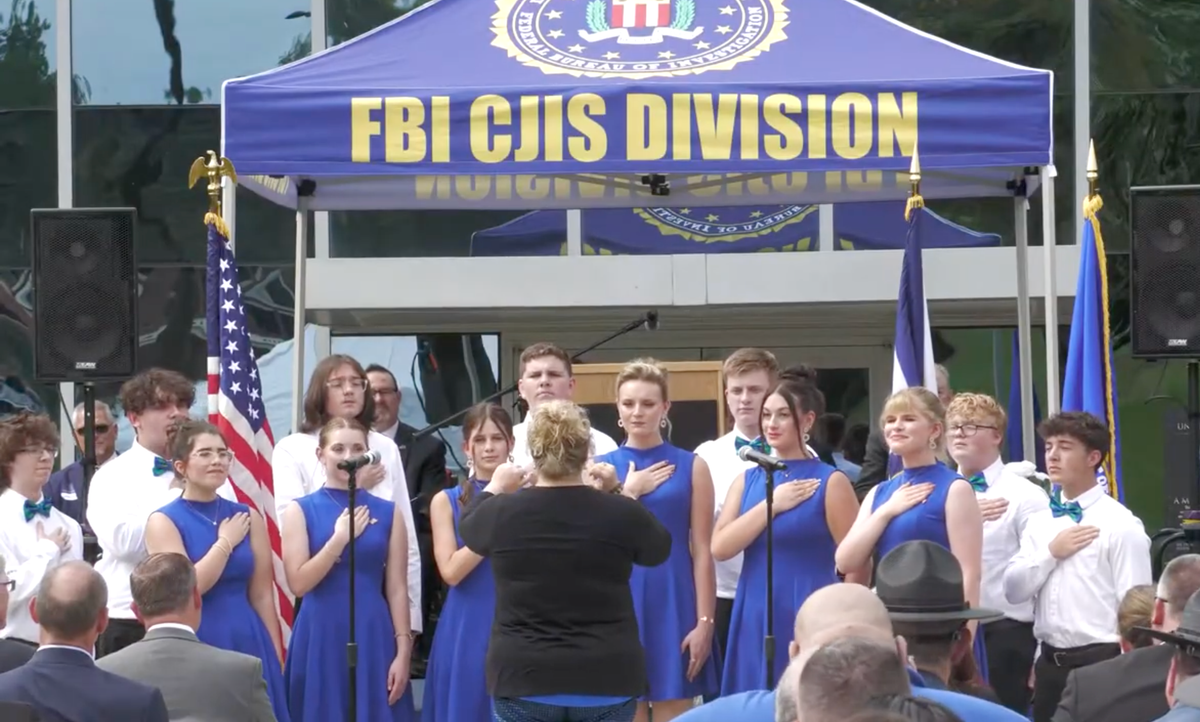
CLARKSBURG, W.Va. — Twenty-five years after the terrorist attacks of Sept. 11, 2001, FBI leaders, first responders, students and community members gathered Friday morning at the FBI’s Criminal Justice Information Services Division in Clarksburg to remember those who were lost and reflect on how the attacks changed the nation and the bureau.
The solemn ceremony at the CJIS campus brought together FBI employees and veterans, Gov. Patrick Morrisey, local first responders and others around the facility’s 9/11 memorial.
Nearly 3,000 people were killed in the attacks on the World Trade Center, the Pentagon and aboard United Flight 93, which crashed near Shanksville, Pennsylvania.
Speakers Friday also focused on what happened in the days, months and years that followed, including the transformation of the FBI and the role employees in Clarksburg played in the response.
CJIS Division Assistant Director Timothy A. Ferguson recalled watching the attacks unfold while serving as a U.S. Army captain at Fort Knox, Kentucky.
Ferguson said the events changed the direction of his career. He joined the FBI less than a year later, entering the bureau as it was transforming into a more intelligence-driven national security and law enforcement organization.
He said younger employees now joining the FBI often have no personal memory of Sept. 11, but understand the significance of what happened and the responsibility of continuing the mission that followed.
Mark Dargis, an FBI operations director and the ceremony’s keynote speaker, said the attacks represented a watershed moment for both the nation and the FBI.
“It’s hard to believe that a quarter of a century has passed because for many of us, the memories of that terrible day are still vivid and real and impactful,” Dargis said.
Dargis said the FBI spent the following decades expanding its intelligence capabilities, strengthening relationships among federal, state, local and international agencies and embracing new technologies to identify threats before attacks occur.
“As the legacy of 9/11 moves from lived memory into history, we must ensure that those who come after us understand not just what happened, but why it matters,” Dargis said.
Morrisey used his remarks to remember two West Virginians killed in the attacks.
Mary Lou Hague, 26, was a Parkersburg High School graduate working as a financial analyst on the 89th floor of the World Trade Center’s South Tower.
Dr. Paul Ambrose, 32, was a Huntington native and Marshall University graduate who was serving as a senior clinical adviser with the U.S. Surgeon General’s office. Ambrose was aboard American Airlines Flight 77 when it was hijacked and crashed into the Pentagon.
Morrisey also recalled his own experience on Sept. 11. He was working on Capitol Hill and helped evacuate members of a congressional committee as officials tried to determine where another hijacked aircraft might be headed.
“For those who lived through it, the memory remains as sharp and as painful today as that day,” Morrisey said.
The governor said West Virginians were among the National Guard members, first responders, FBI employees and others who responded following the attacks.
“That’s why it’s fitting we’re here in Clarksburg, we’re here in Harrison County,” Morrisey said. “We know that West Virginians played such a huge role in 9/11.”
Former FBI CJIS Assistant Director Thomas E. Bush III provided one of the ceremony’s most direct accounts of what happened inside the Clarksburg facility on the morning of the attacks.
Bush was a section chief at CJIS at the time. He recalled being told to turn on the television after the first plane struck the World Trade Center and then watching the second plane hit the South Tower.
“At that particular moment, as much evil as I had seen, as much evil as the FBI has been involved in, that was raised to a different level,” Bush said.
The response quickly reached Clarksburg.
Bush said teams from CJIS were sent to crash sites to assist with identifying victims and processing information. Some employees were sent into assignments dramatically different from anything they expected when they joined the bureau.
“There wasn’t time to reflect and say, ‘Well, wait a minute. I didn’t sign up for that,’” Bush said. “We all signed up for that and we all responded accordingly.”
As the United States entered Afghanistan, Bush said CJIS employees also became involved in efforts to collect and compare fingerprints and other biometric information.
That work ultimately contributed to greater interoperability among FBI systems and databases operated by the Department of Defense, Department of Homeland Security and other federal agencies.
Bush said the impact of that work was sometimes largely invisible to the public and even to employees working inside the Clarksburg facility.
Ferguson said dozens of employees from the campus left their families after the attacks to support the nation’s response.
“No matter where they went or what their job was, one thing remains true,” Ferguson said. “These individuals raised their hands to go where they were needed.”
Friday’s ceremony included the presentation of colors by the FBI Police Honor Guard, the national anthem performed by West Virginia State Trooper Carlton E. Smith and the Pledge of Allegiance led by graduates of the CJIS Teen Academy.
Members of the Clarksburg Fire Department performed a traditional memorial bell toll, followed by a moment of silence.
Students from Robert C. Byrd High School’s choir then performed a patriotic musical tribute.
The ceremony was held beside the FBI campus’ 9/11 memorial, which includes a 22-foot steel column recovered from one of the World Trade Center towers and a six-foot granite monolith recounting the events of Sept. 11.
FBI officials also highlighted additional artifacts connected to United Flight 93 now displayed inside the campus visitor center. The collection includes items recovered from the crash site, a commemorative flag flown over Shanksville and a photograph showing the immediate aftermath of the crash.
Ferguson closed the ceremony by emphasizing that much of the information sharing and law enforcement support strengthened after Sept. 11 now happens from the FBI campus in Clarksburg.
“We have so much information here and we work incredibly hard to ensure our law enforcement partners on the front line have it when and where they need it,” Ferguson said.
Twenty-five years after the attacks, the message repeated throughout Friday’s ceremony was simple: remember those who were lost, recognize those who answered the call and ensure the lessons of Sept. 11 are carried by generations too young to remember it themselves.
“We will never forget,” Ferguson said.


